
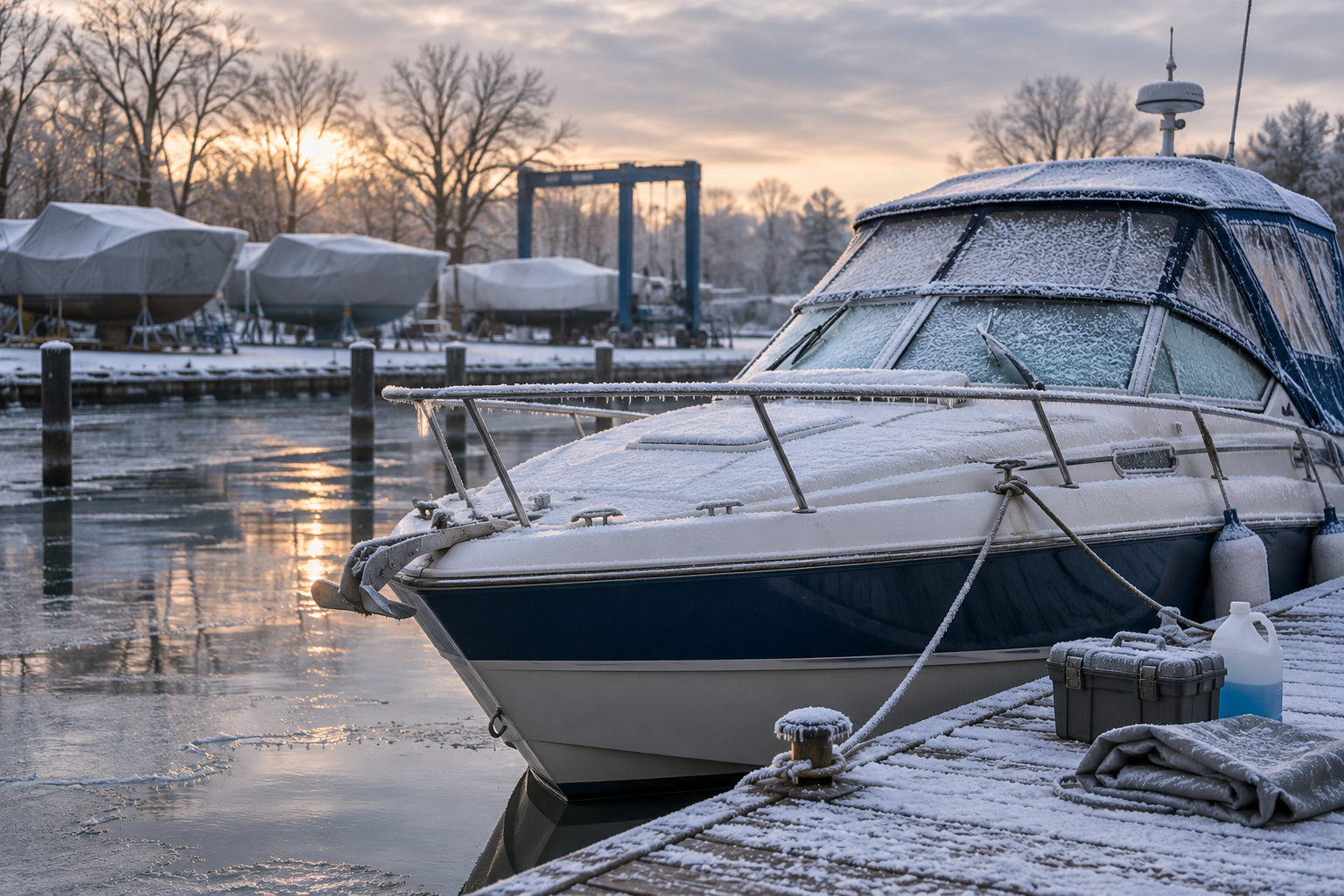
As temperatures drop and the boating season draws to a close, winterising your boat becomes an essential part of protecting its engine and onboard systems. While batteries, fuel tanks and antifreeze often receive the most attention, marine engine hoses are just as important.
These components carry cooling water, coolant and other fluids around the engine. A damaged or deteriorating hose can lead to leaks, overheating or unexpected problems when you return to the water in spring.
Why Winter Can Be Tough on Marine Engine Hoses
Marine engines operate in demanding environments, with hoses exposed to heat, vibration, moisture and, in some cases, saltwater.
Over time, these conditions can cause hoses to harden, crack or lose flexibility. Winter storage introduces additional risks, particularly where water remains trapped inside cooling systems.
As water freezes, it expands. If a cooling circuit has not been properly drained or protected, this expansion can damage hoses, fittings and potentially more expensive engine components.
Checking your hoses before laying up your boat is a simple preventative measure that could save considerable time and expense.
Inspecting Marine Hoses Before Winter Storage
Start by visually inspecting accessible hoses throughout the engine compartment.
Look for cracks around bends and connections, surface deterioration, bulging or swelling, and signs of coolant or water leakage.
Pay particular attention to areas where hoses pass close to metal brackets or other components. Continuous vibration can cause rubbing and eventually wear through the hose wall.
Hose connections deserve attention too. Loose or corroded clamps can compromise otherwise serviceable pipework.
Always carry out inspections with the engine switched off and sufficiently cool.
Don’t Overlook the Cooling System
Cooling system preparation is one of the most important parts of winterising a marine engine.
Depending on the engine design, this may involve draining raw-water circuits, flushing with fresh water or introducing a suitable marine antifreeze solution.
Closed-loop coolant systems should also be checked for the correct antifreeze concentration and condition.
Always follow the engine manufacturer’s winterisation instructions, as procedures vary between raw-water-cooled and freshwater-cooled installations.
Should You Replace Ageing Marine Hoses?
If a hose is showing signs of deterioration, replacing it before winter storage is often preferable to discovering a failure during the first outing of the new season.
Marine-grade silicone hoses can provide a durable solution for suitable engine cooling and wet exhaust applications.
Unlike standard automotive hose, marine wet exhaust hoses must be specifically designed for their operating environment, including the relevant temperature, pressure and construction requirements.
Viper Performance supplies marine silicone hoses for applications including marine engines, wet exhaust systems and auxiliary generators.
Prepare Now for a Trouble-Free Spring
A thorough winterisation routine should cover the entire engine installation, not just the most obvious components.
Inspecting hoses, checking connections and protecting cooling circuits helps reduce the likelihood of deterioration going unnoticed during storage.
A little preventative maintenance now can make recommissioning your boat much easier when warmer weather returns.
Explore Viper Performance’s range of marine silicone hoses to find suitable hose solutions for your marine engine and cooling applications.