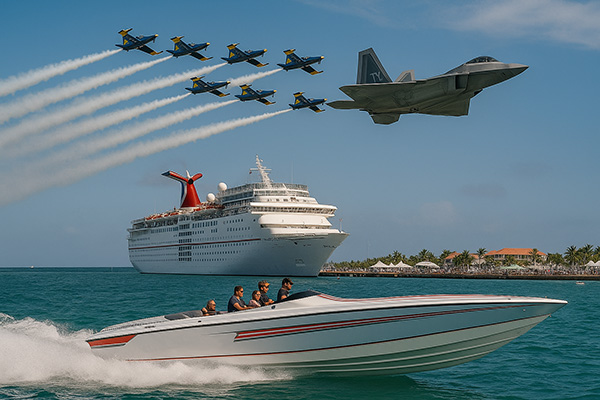
There are events, and then there are bucket list experiences. If you live for horsepower, elegance on the water, or the roar of jet engines in the sky, the world has some incredible shows that will take your breath away. These aren’t just exhibitions — they’re full-throttle celebrations of design, engineering, and pure passion.
Car Shows That Fuel the Soul
1. Goodwood Festival of Speed (UK)
Held at the historic Goodwood Estate in West Sussex, this event is every motoring enthusiast’s dream. It blends historic cars, modern supercars, and future tech into one adrenaline-fueled weekend.
Must-see moment: The hill climb, where legendary cars are pushed to their limits by equally legendary drivers.
2. Pebble Beach Concours d’Elegance (USA)
This is where luxury meets legacy. Hosted on California’s stunning Monterey Peninsula, it’s a gathering of the rarest and most beautiful classic cars in the world.
Must-see moment: The grand parade of multi-million-dollar collector cars, judged for elegance and originality.
3. Tokyo Auto Salon (Japan)
Love modified machines and futuristic concepts? Tokyo Auto Salon showcases the cutting edge of car culture, from insane custom builds to next-gen EVs.
Must-see moment: Wild tuning creations from Japan’s most inventive garages and manufacturers.
🚤 Boat Shows That Make Waves
4. Monaco Yacht Show (Monaco)
If James Bond had a favourite boat show, this would be it. With a backdrop of superyachts, luxury lifestyle, and the French Riviera, the Monaco Yacht Show is the epitome of nautical opulence.
Must-see moment: Touring ultra-modern superyachts that cost more than most private islands.
5. Fort Lauderdale International Boat Show (USA)
Known as the “Yachting Capital of the World,” this Florida-based show is the largest in-water boat show on the planet. From sleek speedboats to floating mansions, it’s all here.
Must-see moment: Watching billionaires and boat lovers alike negotiate deals on the docks.
6. Dubai International Boat Show (UAE)
A jaw-dropping mix of luxury, innovation, and spectacle, this show reflects Dubai’s love for the extravagant. Expect cutting-edge marine tech and some of the world’s most exotic watercraft.
Must-see moment: The night-time marina display, with yachts illuminated under the Dubai skyline.
✈️ Air Shows That Soar Above the Rest
7. EAA AirVenture Oshkosh (USA)
The world’s largest aviation event, held in Wisconsin, attracts over half a million aviation fans and 10,000 aircraft. From vintage biplanes to stealth bombers, it’s a week-long sky spectacle.
Must-see moment: The epic mass fly-in and jaw-dropping night airshows with fireworks.
8. Royal International Air Tattoo (UK)
The RIAT at RAF Fairford is the world’s biggest military air show, offering precision flying displays, massive jets, and international air forces showing off their best.
Must-see moment: The thunderous flyover of aircraft from countries around the globe.
9. Dubai Airshow (UAE)
A blend of defence, commercial aviation and aerospace tech, this show is a showcase of tomorrow’s flying machines. It’s where deals are made and future aircraft are revealed.
Must-see moment: High-speed aerobatic displays performed by elite stunt teams against the desert backdrop.
Final Thoughts: Fuel Your Wanderlust
These shows aren’t just for industry insiders — they’re for dreamers, fans and explorers. Whether you’re standing beneath a fighter jet in full roar, stepping aboard a 200-foot yacht, or watching a hypercar launch from the line, these experiences belong on every enthusiast’s lifetime must-do list.