
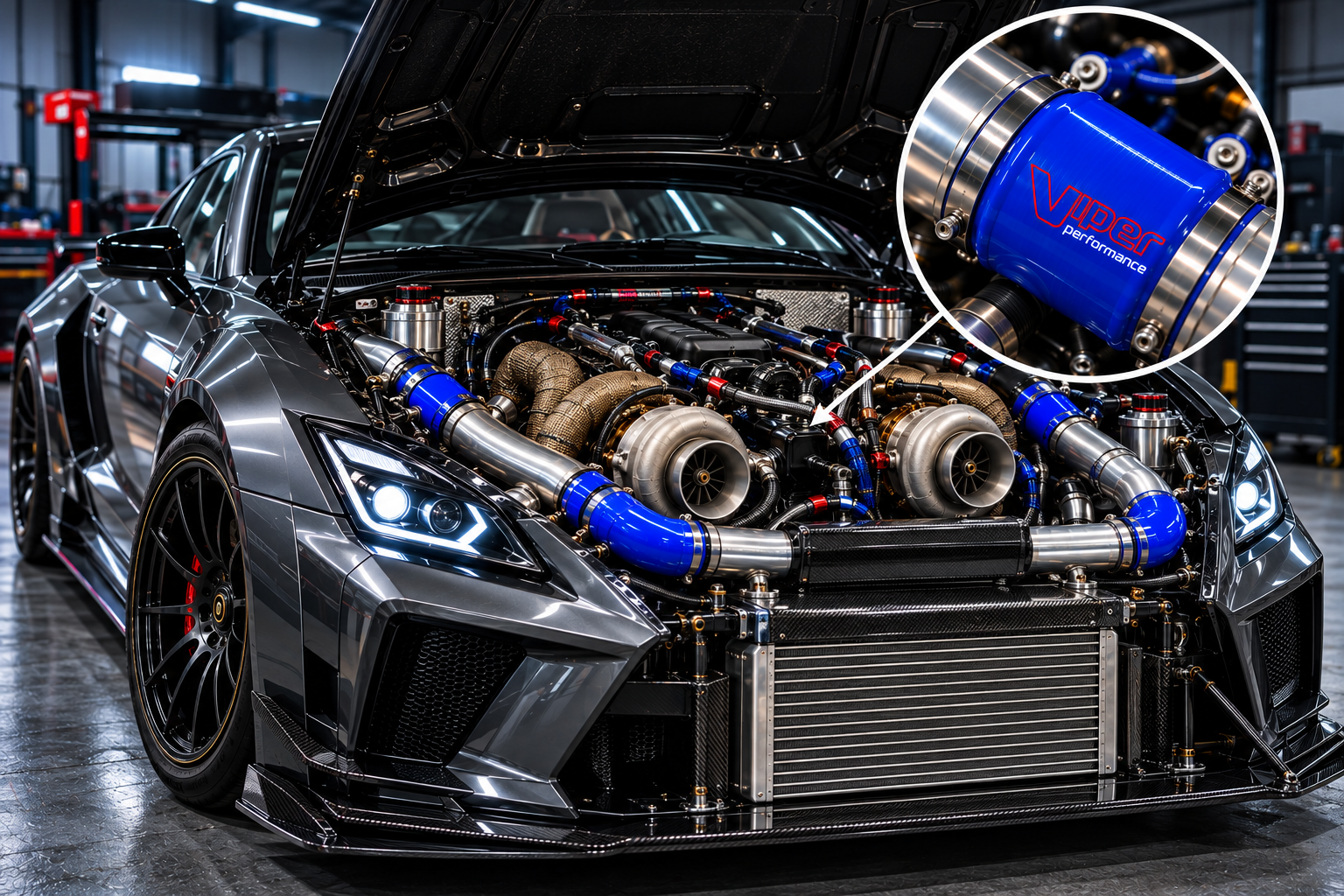
A thousand brake horsepower. Once the preserve of extraordinary racing machinery, it is now a target for ambitious performance-car builders. But achieving four-figure power involves much more than fitting an enormous turbocharger. Under the bonnet is a network of systems delivering air and fuel, managing heat and keeping the engine alive under extreme loads.
It All Starts With Air
An engine needs oxygen to burn fuel. To make more power, it needs to process more air and fuel efficiently. A turbocharger uses exhaust energy to drive a compressor, forcing more air into the intake. At the 1,000bhp level, selecting the right turbo means balancing airflow, compressor efficiency, response and exhaust backpressure. Maximum peak power is only part of the story: how the car delivers that power matters too.
Why Intercoolers Are Essential
Compressing air increases its temperature. Hotter intake air is less dense, and high charge temperatures can make an engine more vulnerable to knock. An intercooler removes heat from the compressed air before it reaches the engine. A powerful build may need a large intercooler, carefully designed ducting and a well-planned route between the turbo, intercooler and intake. Oversized or badly routed components can introduce unnecessary pressure losses, so bigger is not automatically better.
What is All That Pipework Doing?
The polished tubes and coloured elbows in a modified engine bay are not just for show. Rigid aluminium pipes carry compressed intake air, while reinforced silicone hoses connect sections and accommodate some movement and installation tolerance. Each bend and connection needs to be correctly sized, securely clamped and appropriate for the operating temperature and pressure. The available space around radiators, fans, wiring and engine mounts often determines the final route.
Heat: The Challenge You Cannot Ignore
Producing extreme power also generates considerable heat. Turbochargers, exhaust manifolds, engine oil, coolant and compressed intake air each create a thermal-management problem. Engineers may use larger radiators, oil coolers, intercoolers, heat shielding and better airflow through the engine bay. Hoses near hot components need suitable ratings and protection. Even high-temperature silicone should not be assumed safe against direct exhaust contact.
The Engine and Electronics Must Keep Up
Depending on the original engine, a 1,000bhp build may need forged pistons, stronger connecting rods, upgraded fasteners, larger injectors and a higher-capacity fuel system. Engine-management calibration is crucial: boost control, fuelling, ignition timing and protection strategies all have to work together. The strongest hardware cannot compensate for an unsuitable calibration.
Making the Whole System Work
A new turbo can require new charge pipes. A bigger intercooler may demand different mounts, while extra cooling equipment can crowd the engine bay. Sometimes the decisive detail is a hose elbow with the right angle or a tube with the right bend. That is why careful measurement and choosing compatible components matter just as much as headline power figures.
Small Parts, Extraordinary Performance
The spectacular part of a 1,000bhp build may be its acceleration, but its reliability depends on many less glamorous decisions. Viper Performance supplies silicone hoses and aluminium pipes for automotive and specialist pipework projects. Explore the ranges when planning an intercooler installation, intake layout or custom engine build.