
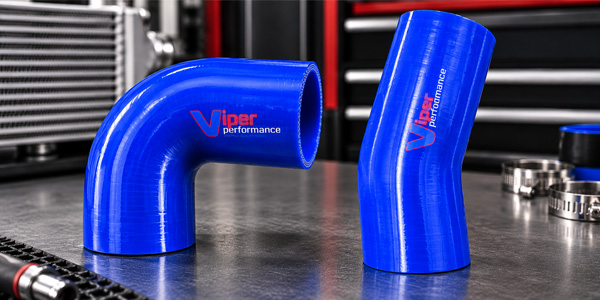
Choosing the right silicone hose size is important for creating a secure and reliable connection. Whether you’re replacing a coolant hose, modifying an intake system or creating custom pipework, a few simple measurements will help you find the right fit.
The most important thing to understand is how silicone hose sizes are measured.
Is a Silicone Hose Measured by Inside or Outside Diameter?
A Silicone hose is normally sized by its inside diameter (ID).
For example, a 51mm silicone hose has an internal diameter of approximately 51mm. This is designed to fit over a pipe or connection with a corresponding outside diameter.
Don’t measure the outside diameter of an existing hose and use that as your hose size. The external measurement includes the thickness of the silicone walls and will therefore be larger.
How Do I Measure for a Silicone Hose?
The simplest method is to measure the outside diameter (OD) of the pipe or fitting that the silicone hose will connect to.
If your pipe has an outside diameter of 38mm, for example, you would normally choose silicone hose with a 38mm internal diameter.
For the most accurate result, use a digital or vernier calliper. This is particularly useful when you’re unsure whether a pipe is a common metric or imperial size.
The hose should fit snugly over the connection without being excessively loose or needing to be heavily stretched.
What If the Pipes Are Different Sizes?
If you’re joining two pipes with different outside diameters, you’ll need a silicone reducer hose.
A reducer has a different internal diameter at each end. For example, a 63mm to 51mm reducer allows you to connect 63mm pipework to a 51mm connection without needing additional adapters.
Reducers are commonly used in custom intake, intercooler and cooling systems.
Do I Need a Straight Hose or an Elbow?
Once you’ve established the correct diameter, consider the route your hose needs to follow.
Straight silicone hoses are suitable for connecting pipework in line, while 45-degree and 90-degree silicone elbows can be used when the connection needs to change direction.
Other options include 180-degree bends, reducers and hump hoses. Choosing the correct shape helps create a cleaner installation and avoids putting unnecessary strain on the hose.
How Do I Measure an Existing Silicone Hose?
If you’re replacing an existing hose, measure its internal diameter, overall length and any bends.
For a shaped hose, check the angle of each bend and the length of the hose on either side. If the hose changes diameter, measure both ends separately.
It’s worth taking these measurements before removing or disposing of the old hose, as it provides a useful reference when selecting the replacement.
Don’t Forget the Hose Clamps
You’ll also need to choose appropriately sized clamps.
Remember that silicone hose sizes refer to the internal diameter, while a clamp fits around the outside. A 51mm silicone hose will therefore have an outside diameter greater than 51mm.
Check the adjustment range of your chosen clamp to make sure it accommodates the external diameter of the hose.
What Size Silicone Hose Should I Order?
As a general rule, measure the outside diameter of your pipe and choose a silicone hose with the same internal diameter.
Then select the appropriate shape, length and configuration for your installation. Getting these measurements right before ordering will make fitting easier and help create a secure, professional connection.
Find the Right Size at Viper Performance
Shop Viper Performance silicone hoses in a wide range of sizes and configurations to find the right fit for your vehicle.