Braided Hoses

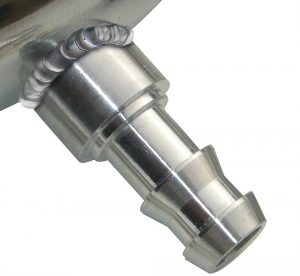
The Viper Performance braided hoses are the perfect solution for oil, fuel, carburettor, water and vacuum lines. NBR rubber lined Steel Braided hoses are specially designed for use with Oil and suitable for all grades of Fuel including race fuel.

As an alternative to Silicone Hoses we supply Quality Stainless Steel Braided hoses for high temperatures, and high pressures.

Viper Performance puts quality at the heart of everything we do. This means that every single product in our range is of superior quality and is made to last.For more information on our Braided hose and fuel hose range, please visit https://www.viperperformance.co.uk/46_braided-fuel-hoses.html

Light Commercial Vehicle (LCV) market declines in January but electric van uptake grows

The new LCV market fell by 26.9% in the first month of 2022 compared with a bumper January last year, according to the SMMT. While this was the weakest start to a year since 2013, January has historically been a volatile month due to the intermittent nature of fleet renewal. 

Newly registered small vans more than halved at 53.9%, while medium sized fell by 29.8%. Medium sized vehicles (those weighing over 2.5 tonnes) represent ⅔ of the LCV market. Sales of pickup trucks also declined by 17.4%, while 4x4s rose 196.8% though remaining a small fraction of the market. 

Diesel remained the dominant fuel type for commercial vehicles (market share of 94.3%), but demand for battery-powered vans grew 21.4%. Electric vans are predicted to increase significantly this year with new model launches expected. It is estimated that 1/16 new vans will be fully electric at the end of 2022.

SMMT forecasts that the LCV market will grow 2% in 2022. For further information, please visit https://www.smmt.co.uk/2022/02/lcv-market-declines-in-january-but-electric-van-uptake-grows/ 

Study confirms Hydrogen fuel cells cannot catch up to battery-electric vehicles

A new study published has confirmed that Hydrogen fuel cell vehicles are unlikely to catch up to battery-electric vehicles. The auto industry has recently been divided on new solutions that eliminate emissions from their products. 

A large number have been certain that battery-electric vehicles (BEV) are the best solution, however a few automakers have instead been trying to make fuel cell hydrogen powertrains work. 

Brands including Hyundai, Toyota, and GM have been the most resistant in giving up on the technology, which can also achieve zero-emission transport, but is proven to be much less efficient than BEVs.

For passenger cars it seems the end of fuel cells (FCEV) are inevitable.

Some of the biggest FCEV programs in the world have failed to gain any reactions after years and billions invested. 

Another main factor that affects both FCEVs and BEVs is infrastructure problems. However, BEVs have the great advantage of having to build on an already extensive electric grid infrastructure with virtually every electric outlet in the world being a potential charging station. 

For more information visit: https://electrek.co/2022/02/15/study-hydrogen-fuel-cells-cannot-catch-up-battery-electric-vehicles/ 

UK car market increased despite a volatile year

According to the latest figure released by the Society of Motor Manufacturers and Traders (SMMT) the UK’s user car market saw an increase in transaction of 11.5% during 2021 this totalled to 7,530,956 transactions. In 2020 more 777,000 cars changed owners despite the year being more affected by the COVID-19 pandemic. Despite this growth the 2021 performance was still below the pre-pandemic five year average by -5.5%.

The fourth quarter of the year resulted in transactions falling by -3.1% to just over 1.6 million, this comes from the semiconductor shortage which impacted the level of new car sales and squeezed the supply of used cars. 

The second quarter of 2021 was the most successful time of the year with 2.1 million transactions. May was the peak of 2021 with 796,782 cars finding new keepers in the month.

Annual demand for battery electric and plug-in hybrid electric vehicles reached a record breaking high, growing by 119.2%.To find out more information visit: https://www.smmt.co.uk/2022/02/used-car-market-up-despite-volatile-year/

Tesla Cybertruck: What We Know So Far About Potential Changes

Tesla’s Cybertruck was predicted to come into production in 2022 however it now appears it will be delayed again until 2023. Tesla has been somewhat guarded in regard to the Cybertruck. However, sightings of the truck have recently been spotted at the Fremont factory test track, with new updated features have been discovered. 

Besides a few small design changes, the Cybertruck prototype was seen with some tape that likely includes hiddes sensors, this suggests that Tesla could have been carrying out calibration testing. 

The most notable change of the Tesla Cybertruck prototype was a large single windshield wiper installed on the driver’s side. This is the first time that the Cybertruck has been spotted with a windshield wiper since it’s unveiling back in 2019. 

Looking at the dashboard of the truck the marble design of the dash is not going to make it to production. Another significant change looks to be the addition of daytime running lamps. Previously there was a horizontal light bar installed on the roof. The roof light bar doesn’t appear to be making it to production anymore.

Read more here: https://insideevs.com/news/560811/tesla-cybertruck-tweaks-updates/ 

New van market grows by over 20% as battery electric demand more than doubles

According to the figures released by the Society of Motor Manufacturers and Traders (SMMT) the UK light commercial vehicle registrations have seen to have bounced back from the COVID-19 pandemic, growing by 21.4% in 2021 when compared to 2020. 

By the end of 2021, 355,380 new light commercial vehicles were registered along with the best December for the sector since 2015. 

The strength of the LCV market is heavily supported by the underlying demand from key sectors, with significant fleet investments resulting in 62,723 more units being registered in the last year. 

The industry also saw a positive result as BEV uptake soared by 142.3% this equated to 12,759 zero emission vans and a total market share of 3.6%. With both petrol and diesel vans facing the same end of sale date as passenger cars, this demonstrates how far the LCV BEV market needs to grow to mirror the shift taking place within the car market. 

There was also a significant increase for both 4x4s and the heaviest vans weighing greater than 2.5-3.5 tonnes of 183% and 27.8%. 

The LVC market is predicted to grow even further in 2022 to 363,700 units, bringing registrations in line with 2019’s 365,778 units.

Read more here: https://www.smmt.co.uk/2022/01/new-van-market-grows-by-a-fifth-as-battery-electric-demand-more-than-doubles/ 

Covid stalls 2021 UK new car market but record EV sales show future direction

2021 new car registrations grew by 1%, as 1.65 million new cars entered the UK market according to new figures released today by the Society of Motor Manufacturers and Traders. 

The market is still down 28.7% on pre-pandemic 2019, representing the second worst year since 1992. Some good news on the other hand. 2021 was the most successful year in history for electric vehicle uptake as more battery electric vehicles were registered than over the previous 5 years combined.

The UK finished 2021 as the third largest European market for new car registrations but the second largest by volume for plug-in vehicles and the second largest for BEVs. It is only in ninth position overall, however, in Europe for BEVs by market share, underlining the progress still to be made, despite the UK having among the most ambitious targets of all major markets with the end of sale of new petrol and diesel cars scheduled for 2030.

Read more here: https://www.smmt.co.uk/2022/01/covid-stalls-2021-uk-new-car-market-but-record-ev-sales-show-future-direction/

Watch Formula One,WRC, and Formula E Cars drag race on wet runway

The World Rally Championship, Formula One, and Formula E are among the top forms of motorsport in the world. Top Gear was able to collect a vehicle from each of these series for a drag race to see which one was the quickest in a drag race. 

Specifically, the WRC machine is a Ford Fiesta. The Formula E car is from the DS squad. Finally, the F1 racer comes from Mercedes-AMG, so this isn’t a vehicle that would be running at the back of the pack in a grand prix.

The runway is wet for this drag race so the Ford Fiesta WRC’s all-wheel-drive system has a distinct advantage in these conditions. 

The DS Formula E machine finishes last. The EV is never a real challenger in the drag race. It sort of looks like the vehicle is gaining on the Fiesta WRC, but there would need to be a lot more track to make the pass. 

On a dry track, we’d expect the results to be very similar. The F1 car might win by a larger margin, but the all-wheel-drive WRC machine would still probably beat the Formula E racer.

Read more here: https://www.motor1.com/news/557675/wrc-formula-one-ev-race/

Bob Lutz says BMW and Mercedes are afraid of Elon Musk

Seasoned automotive exec Bob Lutz has had a lot to say about Tesla’s Elon Musk over the years. Bob Lutz has assumed Tesla was failing for some time, though he has also praised the company from time to time. Lutz discussed with the Financial Times that BMW and Mercedes are afraid of Musk.

Ford and VW Group CEOs continue to credit Elon Musk for leading the electric vehicle way. Meanwhile, BMW and Mercedes have lost large numbers of sales to Tesla already.

The Financial Times article in discussion is sadly behind a paywall, but the article was actually about Elon Musk’s Person of the Year win with Financial Times. The article is titled “Elon Musk: Interview with FT’s Person of the year.”

To find out more – https://insideevs.com/news/554810/lutz-musk-scares-bmw-mercedes/

Battery EV uptake doubles

Battery EV uptake doubles, but the new car market remains well adrift of pre COVID pandemic levels.

New car registrations grew 1.7% in November, bringing an end to four months of consecutive decline. Compared to the pre-pandemic average, the market remains down significantly, with -31.3% fewer vehicles registered during the month.

Plug-in vehicle demand continued to grow, however with battery electric vehicles equating to 18.8% of the market, while plug-in hybrid vehicles’

 share grew to 9.3%. In 2021 to date, 1,538,585 new cars have been registered, 17.5% have been BEVs or PHEVs.

Britain’s ratio of plug-in vehicles on the road to standard public chargers (16:1) was one of the worst among the top 10 global electric vehicle markets at the end of 2020.

Read more here – https://www.smmt.co.uk/2021/12/battery-ev-uptake-doubles-but-new-car-market-remains-well-adrift-of-pre-pandemic-levels/