
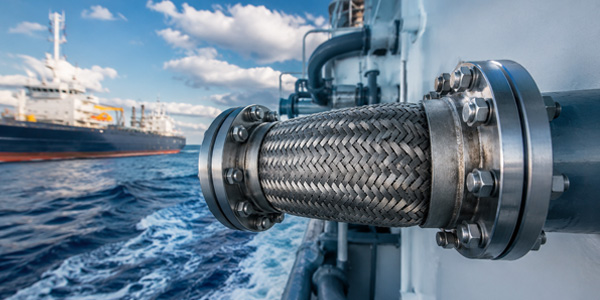
Modern marine vessels operate in some of the most demanding environments imaginable. Constant vibration, shifting loads, changing temperatures and continuous movement place enormous stress on onboard systems every single day. In these conditions, even the smallest component can play a major role in maintaining reliability and performance.
One often overlooked but essential part of marine engineering is the flexible connector.
Designed to absorb movement, reduce vibration and protect connected systems from stress, flexible connectors are used throughout modern vessels to improve durability, efficiency and operational safety.
From engine systems and exhaust assemblies to cooling networks and pipework, flexible connectors help marine equipment perform reliably under constant motion.
Why Movement Creates Challenges at Sea
Unlike stationary industrial environments, marine vessels are always in motion. Ships experience rolling waves, engine vibration, structural flexing and shifting cargo loads, all of which place strain on connected components.
Rigid pipework and fixed systems can struggle to cope with these forces over time. Without flexibility built into the system, stress can transfer directly into joints, fittings and surrounding equipment, increasing the risk of fatigue, cracking and mechanical failure.
Marine systems must also handle thermal expansion caused by changing temperatures during operation. As engines heat up and cool down, connected components naturally expand and contract. Flexible connectors help accommodate this movement without damaging surrounding systems.
Reducing Vibration and Mechanical Stress
One of the primary roles of flexible connectors is vibration isolation. Marine engines, pumps and propulsion systems generate continuous vibration that can travel through pipework and structural components if left unmanaged.
Flexible connectors absorb much of this movement before it spreads through the system. This helps reduce wear on equipment, minimise noise and improve the long term reliability of onboard systems.
In high performance marine environments, controlling vibration is particularly important. Excessive vibration can shorten the lifespan of components, loosen fittings and increase maintenance requirements over time.
By reducing stress across connected systems, flexible connectors help vessels operate more smoothly and efficiently.
Supporting Critical Marine Systems
Flexible connectors are used throughout a wide range of marine applications. Cooling systems rely on them to manage movement between engines and pipework, while exhaust systems use them to handle both vibration and high temperatures.
Fuel systems, hydraulic systems and ventilation assemblies also benefit from flexible connections that allow controlled movement without compromising performance.
In many cases, these components help protect sensitive equipment from structural stress caused by rough sea conditions or heavy engine loads.
Modern marine engineering increasingly depends on components that can adapt to movement while maintaining secure and reliable operation.
Designed for Harsh Marine Environments
Marine environments are extremely demanding on materials. Saltwater exposure, moisture, heat and continuous mechanical stress can quickly degrade poorly suited components.
Flexible connectors used in marine applications are therefore designed using durable materials capable of resisting corrosion, pressure and temperature extremes.
Depending on the application, this may include reinforced silicone, stainless steel or specialised composite materials.
Reliability is essential, particularly on vessels operating far from shore where equipment failure can lead to costly downtime and repairs.
Improving Efficiency and Longevity
Although flexible connectors may appear to be relatively simple components, they contribute significantly to the overall efficiency and lifespan of marine systems.
By reducing stress, absorbing vibration and allowing controlled movement, they help minimise equipment wear and reduce the likelihood of unexpected failures. This lowers maintenance demands while improving operational reliability across the vessel.
As modern ships continue to become more advanced and energy efficient, every component plays a role in supporting performance and sustainability goals.
Small Components With a Major Impact
Flexible connectors are rarely the most visible part of a marine vessel, yet their role is critical in high movement environments where reliability matters most.
From protecting engine systems to supporting thermal expansion and reducing vibration, these components help modern ships operate safely and efficiently under constant mechanical stress.
In an industry where performance, durability and efficiency are essential, flexible connectors continue to play a key role in keeping marine systems moving smoothly across every journey.