Tech details of first all-electric Aston Martin released

Aston Martin Rapide E

Images from Autocar Photography : Nick Dungan

Aston Martin’s first all-electric production car the Rapide E will be a limited 155-unit special edition. The company have however now released technical details for the Rapide E.

Aston Martin has utilised Williams Advanced Engineering’s successful Electric Vehicle (EV) technology to kickstart a new era for their powertrain technology. The aim is to overcome the technical challenges associated with packaging the battery system and motors within the small space available.

A focus has been put on achieving effective cooling of the batteries and motor to ensure consistent performance. Strict weight targets have also been stringently observed. Rapide E will be powered by an 800V battery electrical architecture with 65 kWh installed capacity using over 5600 lithium ion 18650 format cylindrical cells. This battery system powers two rear mounted electric motors producing a combined target output of just over 610PS and a colossal 950Nm of torque.

Rapide Es Technical Details:

  • Projected top speed for the Rapide E is 155 mph, with a sub-4.0sec 0-60 mph time and a 50-70 mph time of just 1.5sec.
  • Range target is over 200 miles
  • Charging at a rate of 185 miles of range per hour using a typical 400V 50 kW charger.
  • The 800V high-voltage battery enables faster charging of 310 miles of range per hour, using an 800V outlet delivering 100kW or higher. 
  • Shod with Pirelli P Zero, Rapide E’s bespoke tyres aim to deliver a lower rolling-resistance and reduced cavity noise.
  • The rear-wheel drive twin electric motors will drive through a Limited-Slip Differential.

Though the Rapide E will be built in low volumes, it is being subjected to Aston Martin’s stringent and exhaustive testing protocols. The dedicated Williams Advanced Engineering team are working closely alongside Aston Martin to ensure every aspect of the prototype test programme follows the established procedures. Uniquely, customers will be an extended part of the ongoing Rapide E programme, with their comments and driving experiences providing an invaluable stream of feedback that will help shape and improve future Aston Martin EVs.

Choosing the right hose clamp

Engine bays encompass a myriad of different hoses, each carrying a different fluid with different requirements. Hoses in ageing vehicles should be inspected and replaced if necessary. It is however also important to inspect and replace the clamps that attach these vital hoses to a car’s components. They are just as important as the hose itself, and failure can result in catastrophe. We have detailed the two types of hose clamps that we currently sell to make your selection easier.

Stainless Steel Worm Drive Hose Clamp

Worm drive hose clampThese worm drive clamps are the more traditional selection for securing hoses. They are perfect for clamping silicone hoses and rubber hoses thanks to the “slot free” smooth band. Our MIKALOR W3 stainless steel worm drive hose clamps are of high quality stainless steel and unlike some other brands, these clamps will not tear and cut into the hose as you tighten.

Buy Here


Stainless Steel T Bolt clamp 

t bolt hose clampT Bolt clamps are commonly used for high pressure applications where other clamps simply pop off. They are also strong enough for clamping Exhausts and are ideal for use for turbos and Intercoolers. Thanks to their stainless steel wide band, and totally smooth inner band a high torque seal is achieved without ruining the hose.

Buy Here


We also sell:

304 Grade Stainless Steel Cable / ZIP ties. These are ideal for fastening Exhaust wrap, wires, or areas under high temperatures. These are a great alternative as high temperatures would normally melt traditional plastic ties. Buy them here.

Is it safe to be in a car during a thunderstorm?

Cars in ThunderstormThe Met Office currently has an amber weather warning spanning across the Midlands and Wales. Thunderstorms accompanied by torrential rain, frequent lightning and some hail have been reported. Although thunderstorms are not prolific in the UK, as with all weather systems, it is a hot topic when they do occur. Some discuss Thunderstorms with exhilaration but many people also feel anxious or fearful of the dangers involved. The big question then is where are you safest whilst a thunderstorm is in progress?

Simply put, the safest place to be in a thunderstorm is indoors. If lightning does happen to directly strike a house or a building, it will tend to follow the available paths to ground, including the wiring, plumbing, antennas and/or steel framework. But if no structural shelter is available, hard-topped cars can offer sufficient lightning protection.

What happens when lightning strikes a car?

Many people believe that it is the rubber tyres on cars that keep you safe in the event of a lightning strike, this however is a bit of a myth. In actual fact a car (excluding soft tops) acts like a faraday cage with the lightning flowing around the car. The majority of the current flows from the car’s metal cage into the ground below. This is why cars are often referred to as being a safe place to be in a thunderstorm, if you cannot get indoors.

But if your car does get hit by lightning in a thunderstorm, you probably would see damage to the vehicle as a result. Most lightning incidents to cars result in external damage, as well as internal damage to electronic systems, but in most cases no injury to the people inside.

So in summary, if you are stuck outdoors in a thunderstorm then your car is a pretty safe place to go and take shelter. Just remember, try to avoid touching anything metal within the car and try not to use electrical components within the car such as radios or charging points for phones. But above all enjoy the beauty of a thunderstorm, they really don’t happen that often in the UK.

Disclaimer: This article is not intended to provide safety advice. We take no responsibility for any outcomes of people who read and follow any of the above information.

Some of the UK’s Best Driving Roads

Best UK driving roadsSo finally it looks like we are about to descend into summer. What better way to celebrate than to jump in the car and enjoy the beauty of the UK and some of its fine roads. To help you along the way we’ve scoured the internet to find some of the best driving roads for your enjoyment. So get your driving playlist ready, and lets hit play:

Hardknott Pass

Image courtesy of dangerousroads.org

1. Hardknott Pass, the Lake District
As I can testify this is not a road for the faint-hearted. This one is for confident drivers, many drivers will agree that the contours of a map fail to capture the reality of the roads. Described by Alfred Wainwright as “a heart-stopping series of sharp and narrow hairpin bends.” This is has to be one of the UK’s most thrilling (or terrifying) roads to drive. Click here for route

Snake Pass

Image courtesy of drivingforpleasure.co.uk

2. The Snake Pass, Peak District
Snake pass is the name of the A57 road where it crosses the Peak District, between Manchester and Sheffield. The name usually refers to the section between Glossop and Ladybower reservoir. The Snake Pass was listed as one of the best driving roads by Auto Trader magazine in 2009. Its apt name matches the winding nature of this route. Drivers will enjoy superb scenery, particularly at the start of the descent into Glossop. Click here for a route

Llanberis Pss

Image courtesy of drivingforpleasure.co.uk

3. The Llanberis Pass, Wales
If its stunning scenery that you’re pining for then get behind the wheel and head to Wales. Llanberis Pass is the road, which takes you from the village of Capel Curig to Caernarfon. Mountains and crystal clear lakes will be your backdrop on this incredible drive. You and your passengers will find yourself escorted by the lake for over a mile until you meet miles of gentle gradients and easy corners. This isn’t a road for the speed demon but rather those looking to take a calmer pace and fully appreciate the beauty that nature has carved for your enjoyment. Click here for a route

Loch Lomond4. Glasgow to Fort William
Running approximately 140 miles this is a run for those who love a long stint in the car. The A82 is the principal route from Lowland Scotland to the western Scottish Highlands. Passing along the shores of Loch Lomond, Loch Ness and in the shadow of Ben Nevis this is a picturesque drive. Click here for a route

St Ives5. St Ives to St Just
If you’re looking to enjoy some of the South West’s finest then take a look at the B3306 from St Ives to St Just. You can expect to enjoy 13 miles of sweeping bends, short straights and tight turns and the views aren’t too shabby either. This one does require full concentration from the beginning and a keen eye for walkers, bikers and livestock. But get it right and it will make you feel alive like few other roads in the UK. Click here for a route

What is Platinum Cured Silicone?

In a platinum-based silicone cure system two different chemical groups react in the presence of platinum. Unlike the traditional Peroxide cured materials Platinum Cured Silicone does not use peroxides as part of the catalysing process. These can sometimes leave trace elements after post cure causing contamination.
As a result Platinum Curing is becoming a more popular choice in many industries including medical, food, drink or dairy applications.

Benefits of platinum cured silicone

There are a range of benefits when choosing platinum cured silicone over alternatives:

  • High tear strength
  • excellent translucency so more visibility through the material
  • non yellowing
  • no peroxide by-products
  • highly hydrophobic
  • extended life in Peristaltic pumps

Platinum cured silicone applications

Due to its advantages as listed above there are many industries now seeking platinum cured silicone products. These include:

Pharmaceutical and biotechnology applications; platinum-cured silicone tubing is an excellent choice for fluid transfer. Its high temperature resistance and fewer potential leachables make it a perfect fit for medical use. Silicone maintains the purity of sensitive fluids due to its excellent biocompatibility and chemical inertness . This type of tubing has smooth surfaces and lower protein binding levels which is another selling point for this particular application.

Food and Drink applications; platinum-cured silicone tubing has revolutionised the transfer of liquids in drinks machines. Traditional peroxide-cured silicone tubing can impair the taste of liquids due to tainting, platinium cured tubing does not have this down side. It’s high tensile strength also means that it’s an ideal fit for food industries.

Dairy applications; Platinum cured silicone is ideal for use in the dairy industry due to its high mechanical wear and excellent tear strength. In comparison to conventional black rubber tubing often used for milking, platinum cured tubes do not harden and corrode with use. Instead, this extremely durable product is made using highly polished dies to create an extra smooth inner bore to improve flow rate and hygeine levels.

Viper Performance products

Here at Viper we supply only the highest quality platinum grade silicone available on the market, with a very high level of purity. Sold here in 5 Meter continuous lengths. Click here to read a blog all about our FDA Platinum Silicone Tubing and find out how to buy yours.

Our 180 degree aluminium pipe bends

Our aluminium pipes are polished and roll beaded and of the finest grade 6063 alloy for easy welding. Our 180 degree hose joiner have roll beaded ends for best hose retention. Hose Joiners are ideal for joining hoses for Intercoolers, Radiators, Air induction, Superchargers, intercooler systems or for making any D.I.Y system. Our mandrel bends have the tightest bend radius on the market.

Some features of our aluminium Hose Joiners:

– Mandrel bent,
– Mirror polished
– Roll beaded ends for best hose retention,
– Seamless tubing,
– Wall thickness 1.6 to 2.0mm,
– Tightest bend radius on market
– Clean finish ready to use,

For more information on our aluminium pipe bends, please visit our website. 

What comes in our Vacuum Tubing Kits?

Our vacuum tubing is now available in Extra Value convenient kit packs. These packs include 3,4,5 and 8mm ID tubing perfect for a variety of applications. We include cable ties and nylon tube connectors in the packs

Applications:
• Vacuum lines
• Brake servo
• Breathers
• Boost controllers
• Dump valves
• Windscreen wipers

Buy yours here

Why we produce 4 meter hoses

As well as our silicone elbows and 1-2 meter long hoses we also offer a 4 meter long straight lengths. Offering 4 meter lengths eradicates the need to buy four separate lengths and join and clamp them together. Any join creates a potential area for leaks and therefore one single piece will provide you with a quality leak free connection.

These continuous 4 meter lengths are available in selected sizes from 8mm up to 32mm diameter (please visit the website to check sizes available).

They are ideal for water, breathers, air connections without making a join. The length also makes them ideal for non automotive applications.

Available from 3 to 5 ply with a reinforced construction these straight hoses offer excellent build quality with an inner liner. Thanks to our quality material, and fabrics, our small diameter lengths are very flexible and achieve a very good bend radius.

To find out more and buy your 4 meter hose click here.

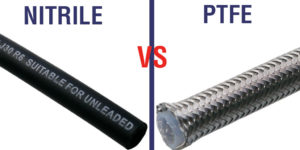
The difference between PTFE and Nitrile Rubber Hoses

nitrile vs ptfe


When upgrading your engine bay or fuel system, it can be difficult to know exactly what type of hose you need. With so many hoses on the market, you may run into problems selecting the correct material hose for your desired application. This piece is designed to help you understand the difference between PTFE and Nitrile rubber hoses, so that you can choose the correct one for you.

As with everything, PTFE and Nitrile rubber hoses both have their advantages and disadvantages. Understanding them is important, as it could make a big difference to your fuel system.

Nitrile rubber braided hoses offer great resistance to oil and fuel. The flexible rubber means that nitrile rubber hoses offer an excellent bend radius. This means that you can create the desired system without the need for extra fittings and angles. The hoses can be bent and fixed as needed, resulting in a sleek and tidy fuel system.

However, nitrile rubber hoses should never be run inside the cabin as fuel fumes can permeate through the wall of the hose. They should only be run in areas such as underneath the car, or under the hood.

For hoses that need to be run inside the cabin, PTFE hoses are ideal, as fuel fumes will not permeate the hose walls. However, as PTFE hoses have a significantly reduced bend radius, more angle and end fittings may be required, which increases the chance of a leak occurring in the system. While PTFE hoses are generally cheaper, the savings are often spent on the extra fittings that are required. An additional benefit however is that PTFE hoses are lightweight, so if weight is a concern, PTFE hoses might be the ideal solution for your fuel line.

For more information about our PTFE or nitrile hoses, you can visit our main website. Alternatively, you can get in touch and we would be happy to talk through your requirements with you.

Improved International Shipping

Here at Viper Performance, we have recently switched to DHL to ship many of our products to our international customers. This now allows us to offer better shipping rates. It also allows to improve our already impressive service.

We can ship our products to almost anywhere in the world, making Viper Performance hoses available across the Globe. If you have any special requirements, please get in touch and we would be happy to discuss your needs with you.

To see our full product range that is available for international DHL shipping, please visit our website.