
Marine engineering is one of the most complex and demanding disciplines in the world. When it goes right, it keeps global trade moving, enables exploration, and delivers incredible feats of innovation. But when it goes wrong, the results can be catastrophic. The following ten examples highlight some of the most infamous marine failures in history, along with the crucial lessons each one taught the industry.
- The Vasa (1628) – Top-Heavy and Doomed to Sink
The Fail: Sweden’s pride, the Vasa warship, sank just 1,300 meters into its maiden voyage.
The Lesson: Overengineering without proper testing is a recipe for disaster. The Vasa was overloaded with cannons, making it too top-heavy to stay upright.
Modern Takeaway: Stability calculations are not optional—they’re critical. Design must be validated, not just impressive on paper.
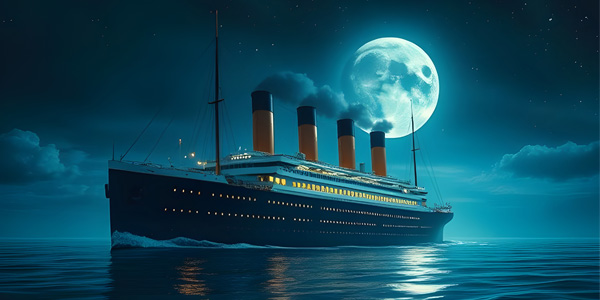
- RMS Titanic (1912) – “Unsinkable” Meets Iceberg
The Fail: The Titanic’s overconfidence in design led to a catastrophic underestimation of nature’s force.
The Lesson: No matter how advanced your engineering, arrogance is dangerous. The lack of sufficient lifeboats and a brittle hull structure proved fatal.
Modern Takeaway: Risk management and redundancy are just as important as innovation.
- Exxon Valdez Oil Spill (1989) – Navigation Neglect
The Fail: A 10.8 million gallon crude oil spill devastated Alaska’s coastline.
The Lesson: Human error and lack of safety systems can undo even the most robust marine systems.
Modern Takeaway: Technology and human oversight must work hand in hand. Automation alone can’t prevent disaster.
- MV Sewol (2014) – Improper Cargo Loading
The Fail: The South Korean ferry capsized, killing over 300 people, many of them students.
The Lesson: The ship had been illegally modified, overloaded with cargo and operated by an inexperienced crew.
Modern Takeaway: Cutting corners for profit can be deadly. Compliance with weight distribution and structural limits is non-negotiable.
- Costa Concordia (2012) – A Captain’s Misjudgement
The Fail: A massive cruise liner ran aground due to a reckless manoeuvre, causing 32 deaths.
The Lesson: Advanced engineering can’t compensate for poor leadership and showboating.
Modern Takeaway: Technical systems must be supported by disciplined, trained professionals who respect the machine and the sea.
- Deepwater Horizon (2010) – Engineering vs. Corporate Pressure
The Fail: The explosion of this offshore drilling rig killed 11 workers and caused the largest marine oil spill in history.
The Lesson: Warning signs were ignored in favour of keeping operations on schedule.
Modern Takeaway: Safety culture isn’t just a slogan. It must be embedded into every level of decision-making.
- S.S. El Faro (2015) – Weather and Communication Failures
The Fail: A cargo ship sailed directly into a hurricane, resulting in 33 deaths.
The Lesson: Outdated weather tracking, poor communication and overconfidence doomed the vessel.
Modern Takeaway: Real-time data, reliable communication, and adaptive routing systems are essential in today’s maritime industry.
- Hovercraft SR.N4 Retirement – Speed vs. Practicality
The Fail: The massive passenger hovercrafts once crossing the English Channel were retired due to high costs and inefficiency.
The Lesson: Not every flashy solution scales well economically or environmentally.
Modern Takeaway: Engineering must balance innovation with sustainability and long-term feasibility.
- Rena Oil Spill (2011) – Misjudged Navigation
The Fail: A container ship ran aground on a reef in New Zealand, causing an oil spill and massive cargo loss.
The Lesson: Navigational errors remain one of the biggest risks in marine transport, even with GPS.
Modern Takeaway: Systems redundancy, real-time alerts, and crew training can prevent such costly blunders.