
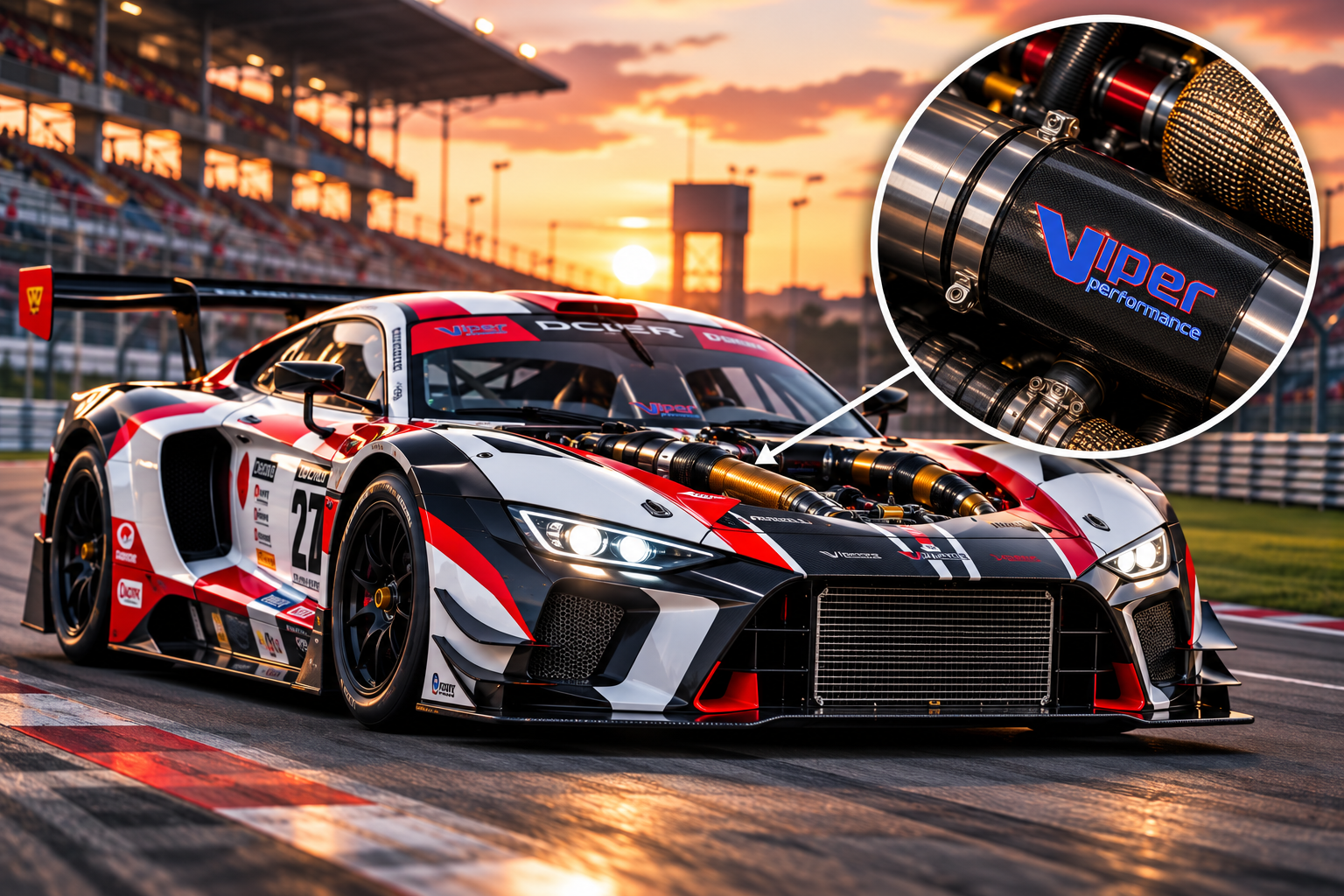
Imagine driving flat out for hours while your engine, turbocharger, brakes and transmission generate intense heat. For racing teams, this is a normal operating environment. Keeping temperatures under control is essential not just for peak performance, but for reaching the finish line. The solution combines cooling-system design, airflow management, careful monitoring and components suited to demanding temperatures.
Why racing creates so much heat
An internal-combustion engine converts only part of the fuel’s energy into useful mechanical work; much of the remainder becomes heat. Long periods of high load make the problem harder. Exhaust components and turbochargers can become exceptionally hot, while nearby wiring, seals and hoses must remain protected.
Radiators are only the beginning
Liquid-cooled engines circulate coolant through the block and cylinder head, transferring heat to a radiator. But radiator size is only part of the equation. Racing teams also consider pump performance, airflow through the core, ducting, pressure losses and aerodynamic drag. Cooling openings that are too large can compromise aerodynamic performance; openings that are too small can lead to overheating.
Turbochargers add another thermal challenge
A turbocharger is driven by hot exhaust gas, while compressing intake air also raises its temperature. Intercoolers help cool the compressed charge before it enters the engine. The associated boost pipework must handle pressure and temperature, and the route must avoid exposing hose connections to excessive radiant heat from nearby exhaust parts.
Where high-temperature silicone hoses fit in
Silicone hoses are valued for flexibility and resistance to heat and ageing, but construction matters. Polyester-reinforced hoses suit many conventional cooling and air applications; specialist high temperature silicone hoses use reinforcement such as Nomex for more demanding conditions. Nomex is a heat-resistant aramid fibre, used within the hose construction to help meet higher operating requirements.
Understanding temperature ratings
Viper Performance’s published silicone hose technical data lists standard polyester-reinforced hoses at working temperatures up to approximately 170°C and Nomex-reinforced versions up to 220°C, with higher short-term peak ratings. These figures are product-specific, not a universal rating for all silicone hoses. Always check operating temperature, pressure, exposure duration and the fluid or gas being carried. A high-temperature rating does not make a hose suitable for direct contact with exhaust components.
How teams protect the rest of the car
Radiators, intercoolers, oil coolers, thermal barriers and carefully directed airflow work together. Engineers also collect temperature data during testing and races, watching for changes that may indicate blocked airflow, coolant loss or another developing fault. A sensor reading can reveal a problem before it becomes a mechanical failure.
Why endurance racing raises the stakes
In a 24-hour race, components must tolerate prolonged heat, changing ambient conditions and repeated high-load operation. Hoses need suitable support, secure clamps and protection against chafing. Reliability is often decided by these seemingly small details.
Choosing the right hose
Before ordering, confirm hose diameter, system pressure, continuous operating temperature, exposure to radiant heat and fluid compatibility. Conventional silicone constructions are not generally suitable for direct fuel or oil transfer without a specifically compatible liner. Viper Performance’s high temperature silicone hoses offer options for suitable demanding applications; use the technical specifications to select the correct construction.