Role of carbon fibre pipes in motorsport enhancement

This image is licenced under Adobe Stock. Please refrain from using it without proper permission.

Carbon Fibre pipes and motorsport, where quicker is very much better.

In motorsport, every detail and component are key, working together to collectively drive speed and performance that outcompetes it’s competition. Every component of a racing vehicle is meticulously designed and engineered to contribute to its overall performance. One such component that has revolutionized the motorsport industry is carbon fibre pipes. These pipes, often used in exhaust systems and structural components, have become a game-changer, offering a unique blend of strength, weight reduction, and heat resistance.

The primary advantage of carbon fibre pipes lies in their strength-to-weight ratio. In motorsport, reducing the weight of the vehicle is paramount. Lighter vehicles can accelerate faster, brake quicker, and are more agile through corners. Carbon fibre pipes are significantly lighter than their metal counterparts, often weighing less than half as much, which in turn can lead to substantial performance gains on the track.

Moreover, carbon fibre pipes have exceptional heat resistance properties. In a high-performance racing engine, exhaust gases can reach extremely high temperatures, especially over long stretches of extended acceleration and braking. Traditional materials, like steel or aluminium, can warp or degrade under these conditions, leading to decreased performance and potential failure. Carbon fibre, on the other hand, maintains its structural integrity even at high temperatures, ensuring consistent performance throughout a race.

The durability of carbon fibre is another significant advantage. Motorsport is a demanding environment, with vehicles often subjected to high stresses and impacts. Carbon fibre pipes have a high impact resistance, meaning they can withstand these stresses without deforming or breaking. This durability translates into increased reliability on the track, limiting the number of potential pit stops and replacements, which can be expensive, annoying and most importantly timely for the driver.

The use of carbon fibre pipes also allows for more flexible design possibilities. Carbon fibre can be moulded into complex shapes, allowing engineers to design pipes that optimise airflow and fit perfectly within the tight confines of a racing vehicle. This flexibility can lead to improved aerodynamics and more efficient engine performance.

However, the use of carbon fibre is not without its challenges. The material is more expensive than traditional metals, and its manufacture requires specialised skills and equipment. Additionally, while carbon fibre is highly resistant to heat and impact, it can be susceptible to damage from abrasion or UV exposure. Despite these challenges, the benefits of carbon fibre pipes in motorsport are so significant that many teams consider the investment worthwhile, especially with the short term additional cost drastically outweighed with the potential of the riches associated with victory.

Maintenance and care tips for silicone hoses (extending their life span)

This image is licenced under Adobe Stock. Please refrain from using it without proper permission.


Looking after your silicone hose, it all starts here…

Silicone hoses are recognized for their flexibility, heat resistance, chemical resilience and high-quality material, and with the proper maintenance silicone hoses can last for a very long time, this does however require essential proactive maintenance.

Regular Inspection:

Proactive, regular inspection is crucial to maintaining the integrity of your silicone hoses. Over time, damage can occur from the interior or exterior, resulting in small leaks that can escalate into significant problems. Inspect the hoses for bulges, leaks, hardening, or softening. When inspecting your silicone hose it’s important to ensure that it is correctly stored, try store your houses hoses in a cool, dry place away from direct sunlight, extreme temperatures, and aggressive chemicals. This will prevent premature aging and keep the hoses in optimal condition for future use.

Correct Installation:

Installing silicone hoses correctly is the first step towards longevity. Incorrect installation may strain the hose, reducing its lifespan and leading to premature failure. Ensure that the hoses are installed without twisting and are aligned correctly with the connections. Additionally, when using clamps, use the right type and size to prevent excessive pressure or slipping which can cause additional wear on the hose, or outright stop it from connecting as intended.

Temperature Regulation:

Silicone hoses are known for their high-temperature resistance. However, this doesn’t mean they’re immune to damage caused by extreme temperatures. Continually exposing hoses to extreme heat or cold may accelerate wear. Therefore, try to regulate temperature conditions whenever possible to prolong hose lifespan.

Despite all precautions, your silicone hoses will eventually wear out over time, thus it’s important to replace your silicone hose when its lifespan has run low. Not doing so can lead to larger complications that can arise from faulty hoses, which could severely affect performance or outright stop the intended application from working at all. By regularly monitoring your silicone hose you can cut down on such complications. Using high quality, trusted suppliers can also impact the lifespan of your silicone hose. With higher quality comes greater durability, which can in the long term lead to drastically lower costs.. Viper Performance are trusted suppliers of silicone hoses with years of experience, check out our range of high-quality silicone hoses here.

What’s New May, 2023


Viper Performance are proud to announce the very much anticipated extension to the silicone hose range with the addition L-Shaped Elbow Silicone Hose in different 8 sizes! The silicone hose is a staple of any good engineering project and we are happy to announce the extension of one of our most popular product ranges!

We have also been blown away with the number of pre-orders for our new carbon fibre range, we are still taking pre-orders for both the carbon fibre straight pipe and elbow carbon fibre pipe. Carbon fibre pipes can be a great alternative for businesses looking for additional strength and overall performance which can be found in carbon fibre pipes. Viper Performance’s carbon fibre pipe range  are carefully designed, tested and quality controlled to ensure optimal performance while allowing them to meet the necessary safety standards for their intended applications.

Be certain to keep checking out for new existing product releases, new categories and existing category extensions, want to be on the ball? Subscribe to our monthly newsletter for new product updates, fun industry information and all things engineering!

What are the main uses of silicone?

From automotive to construction, the many (many) benefits of silicone hoses!

Silicone is a versatile material that has found a wide range of applications in various industries. The dependable and quality components of silicone make it an excellent material for a variety of applications, from construction and automotive, all the way to industrial applications to name a few.

Construction and Engineering

Silicone is widely used in construction and engineering. They provide a waterproof, airtight, and flexible seal that can withstand extreme temperatures, UV radiation, and weathering. Their durable properties are favoured as they help provide longevity to production projects, whereas their ability to withstand those extreme temperatures make them a common appliance in many climates and construction applications.

Automotive Industry

The automotive industry is one of the primary users of silicone hoses. They are used in high-performance engines to transfer air, coolant, and other fluids. Silicone hoses are preferred over other types of hoses because they are more durable and can withstand high temperatures and extreme pressures. They are used in a variety of automotive applications, including turbochargers, intercoolers, radiators, and air intake systems.

Food and Beverage Industry

Silicone hoses can regularly be found in the food and beverage industry, being used in various applications such as food & beverage dispensing. As long as the silicone used is FDA approved, using specific platinum curing methods, silicone can be incredibly effective, given its resistance to high temperatures, allowing it to withstand harsh cleaning chemicals, while also making them easy to clean and maintain. With this in mind it’s important to choose a supplier that is approved & trustworthy. Viper Performance offer a range of silicone hoses that are FDA approved and ready to be sent out.

Rail Industry

In the rail industry, silicone can be especially effective, due to its unique properties and characteristics. For starters thanks to it’s excellent electrical insulation, it can be used in electrical connectors, cables and wires, ensuring reliable and safe electrical connections. Silicone can also have good resistance to high temperatures, which is beneficial in the rail industry where components can be exposed to heat generated by the friction of trains or nearby engines. Viper Performance, offer a range of silicone products with low toxicity grade components, another vital component in rail industry manufacturing.

Which Electric Car Has The Longest Range?

This image is licenced under Adobe Stock. Please refrain from using it without proper permission.

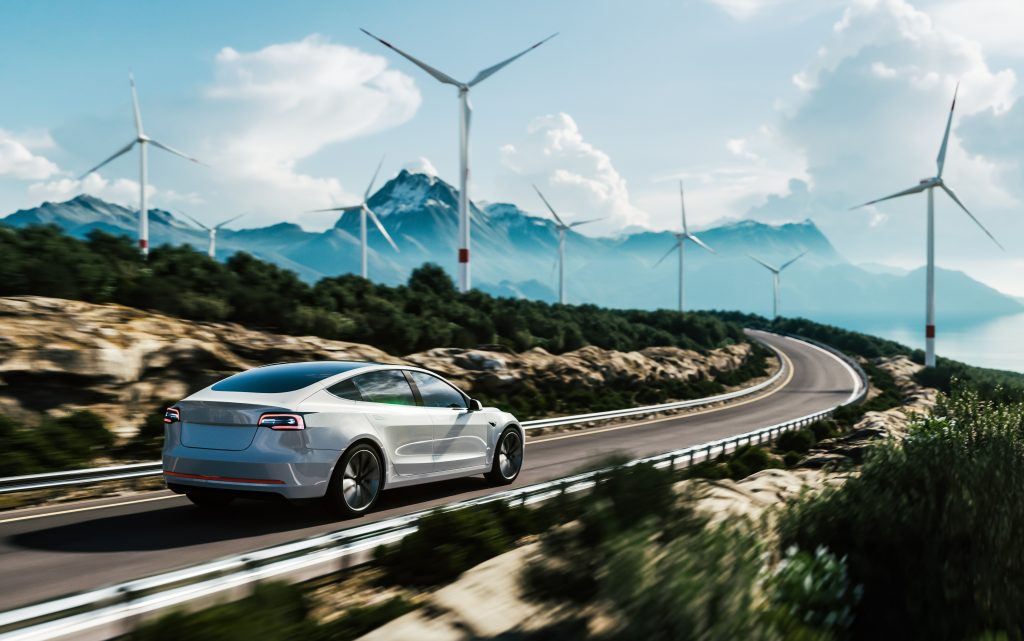
One of the major concerns that people have about electric cars is their range which is the fear of running out of battery power before reaching your destination, especially in rural areas where there is a lower abundance of available EV charging points. However, with advancements in battery technology, many electric cars are now able to travel further distances than ever before.

One of the current leaders in the electric car range is the Tesla Model S Long Range, which can travel up to 405 miles on a single charge. This is significantly more than many of the other electric cars currently in the market. The Model S Long Range uses a 100 kWh battery pack. Tesla has also designed the Model S to be more aerodynamic, which helps to increase its range, while also giving you the option of greater speed.

Surprisingly (not), the best of the rest feature a further 2 Tesla EV’s. Including the Tesla Model X Long Range: The Model X is an all-electric SUV that can travel up to 371 miles on a single charge. It uses the same 100 kWh battery pack as the Model S Long Range and like it’s big brother it has been designed to be aerodynamic. The other Tesla is the Tesla Model 3 Long Range: The Model 3 is Tesla’s entry-level electric car and can travel up to 358 miles on a single charge. Unlike the Model X & S, the Model 3 uses a 75 kWh battery pack, lower than it’s compatriots.

Also included is America’s favourite Ford Mustang, and there Mach-E, an all-electric SUV that can travel up to 305 miles on a single charge. It uses a 98.8 kWh battery pack and is designed to be both stylish and practical.

Now the moment you’ve been waiting for (drumroll please). One of the UK’s newest market debutantes. The Lucid Air is a new electric car from Lucid Motors that has an estimated range of up to 516 miles on a single charge (which is a lot of miles). This is significantly more than any other electric car currently on the market!!! The Lucid Air uses a 113 kWh battery pack, which is currently the largest available in any production electric car. Having entered the market in late 2022 / early 2023, don’t expect to see too many of these on our roads (yet), however with prices starting at around £60,000, you may find yourself paying considerably less than when compared to Lucid Motors American cousins, Tesla.

Elon Musk & Tesla’s days of being range and performance leaders are nearing an end. With new starters cropping up every month, it’s not hard to imagine seeing the Lucid Air overtaken, will it be a newcomer such as VinFast from Singapore, or DeLorean (very cool name may we add), time will tell…

What are the benefits of carbon fibre over aluminium

This image is licenced under Adobe Stock. Please refrain from using it without proper permission.

Why your new project should choose carbon fibre over aluminium and much more!

Carbon fibre and aluminium are two materials that are commonly used in manufacturing products in various industries. While aluminium has been the traditional choice for many applications, carbon fibre has emerged as a popular alternative due to its many benefits.

Strength

Carbon fibre pipes can be much stronger than aluminium, making it ideal for use in applications where strength is critical. It has a strength that is up to 10 times higher than aluminium, which means it can withstand much greater forces without breaking or deforming. This makes carbon fibre ideal for use in high-performance products such as sports equipment, aircraft, and automotive components where under-performing strength can have detrimental impacts.

Durability & cost-effectiveness

Carbon fibre pipes is highly durable and can withstand extreme temperatures, impacts, and vibrations. This makes it ideal for use in products that are subjected to harsh conditions, such as aerospace, automotive, and sports equipment. Products made from carbon fibre can last much longer than those made from aluminium, reducing the need for frequent repairs and replacements, which again will help with staying cost-effective with 1 carbon fibre pipe possibly lasting considerably longer than an aluminium tube. This’ll inevitably cut down on the costs of new purchases, while also cutting-down on the costs associated with maintenance.

Lightweight

Despite all of these factors one of the most significant benefits of carbon fibre over aluminium is its lightweight construction. Carbon fibre is about 40% lighter than aluminium, which means products made from carbon fibre such as carbon fibre pipes can be much lighter and more manoeuvrable than those made from aluminium. This makes carbon fibre ideal in high performance industries including motorsports. Lighter vehicles are much more likely to be quicker, giving the user an edge over their competition. Aerospace industries also benefit from using carbon fibre over aluminium, by reducing weight, giving the aeroplane a greater distance allowing for more destinations, while more importantly also cutting down on fuel costs, both of which produce lower costs and higher profits for airlines.

Overall while aluminium most definitely has its benefits, carbon fibre pipes and piping can prove to be a very effective short and long term solution. Not only are you provided with greater overall quality in the short term, in the long term you could possibly save money on maintenance costs thanks to the greater durability.

Can Silicone Be Eco Friendly?

This image is licenced under Adobe Stock. Please refrain from using it without proper permission.

Can silicone & silicone hoses be eco-friendly?

In an ever-environmentally conscious planet, when choosing materials for manufacturing and everyday use, it is important to know that the materials used are both environmentally and financially friendly. Silicone in particular has stood out achieving both, winning plaudits for its versatility to ever changing consumer habits.

One of the key advantages of silicone is that it is extremely long-lasting. Unlike many other materials, silicone does not break down easily and can withstand high temperatures, making it an ideal material for use in a range of products.

Thanks to its ability to withstand higher temperatures, silicone is a favoured material in the manufacturing of automotive/industrial hoses. For example Silicone hoses are ideal for applications such as radiator/coolant hoses, boost / turbo hoses and any other uses that require air/liquid passage. When looked after properly they can last very long time, meaning you don’t need to replace the hose as often, compared to using lower-quality materials.

Another eco-friendly aspect of silicone is its versatility. Because it can be used in so many different applications, silicone can help to reduce the need for multiple materials, potentially reducing the overall environmental impact of manufacturing and production. Silicone Hoses are regularly used in the ‘Renewable Energy’ market to further create an environmentally friendly life cycle.

If you are looking to upgrade to Silicone Hoses in your application please check our wide range of silicone hose products here.

Looking for a hose for fuel & oil applications?

This image is licenced under Adobe Stock. Please refrain from using it without proper permission.

Does your fuel/oil project require a silicone hose? Look no further.

When dealing with fuels such as oil, it’s incredibly important that you choose a fuel hose that provides the quality needed to ensure both reliability to ensure any unwanted accidents or issues, while also looking at the performance, to ensure quality of the fuel application and also increase longevity and value for money. At Viper Performance we have a wide variety of fuel friendly hose applications, including our oil resistant silicone hoses & flexible nitrile fuel filler hoses

Both products offer solutions to a wide variety of fuel applications (confused which hose is right for the fuel you are using? Check out this handy compatibility chart below).


Fluoro lined hoses are especially compatible for oil applications, with heavy oil mists or oil flows, while fluoro silicone hoses offer fuel resistant properties and can work as fuel filler hoses. Braided silicone hoses can be especially useful when working with fuel lines and have great applications in those areas. The majority of our fuel resistant hoses are made with fluoro liner, but are limited by stock so be sure to email us for a production run of a specific size.

If you are looking for added flexibility, the flexible nitrile fuel filler hoses are made with nitrile liner, with an added wire helix embedded between, giving It additional flexibility, making it a perfect replacement for difficult fuel filler hoses.

At Viper Performance, quality is always put first, that’s how we are able to offer such a wide range of fuel friendly hoses, backed by an array of quality 5* reviews, from customers who have come time and time again for our quality and great value for money.

Looking for silicone hoses for your project or application? Check out our full range of high-quality silicone hoses here.

Our most anticipated electric car of 2023 🔌

This image is licenced under Adobe Stock. Please refrain from using it without proper permission.

The automobile industry has been revolutionized by the introduction of electric cars. In recent years, the demand for electric cars has increased significantly, and the industry is set to see some exciting new models in 2023 as more and more manufacturers attempt to enter this market. With all of this we take a look at our most exciting upcoming electric car of 2023!

Now this wouldn’t even be a discussion if we didn’t mention Tesla… The Tesla Cybertruck is expected to make it’s long-awaited debut this year (hence our excitement), unless it is delayed (again), and is easily our most anticipated electric car of the year. With its bold design and impressive capabilities, the Cybertruck is set to change the game for pickup trucks.

To truly understand our excitement, you must know that the Cybertruck is incredibly powerful. It can accelerate from 0 to 60 mph in just 2.9 seconds, which is faster than most sports cars on the market today. This makes it an ideal choice for anyone who needs a powerful vehicle for towing or hauling heavy loads. (Did we say it can tow up to 14,000 pounds)!

The Cybertruck also has impressive range capabilities. It can travel up to 500 miles on a single charge, which is more than enough for most people’s daily commutes. This makes it an ideal choice for anyone who wants to reduce their carbon footprint and save money on fuel costs.

Another key capability of the Cybertruck is its durability. It is made from ultra-hard 30X cold-rolled stainless steel and features armoured glass windows, which makes it incredibly tough and resistant to damage (unless you are Elon Musk throwing a brick). This makes it an ideal choice for anyone who needs a vehicle that can withstand tough conditions, such as construction sites or off-road environments.

The Cybertruck also has some unique features that set it apart from traditional pickup trucks. For example, it has a retractable tonneau cover that can be used to protect cargo from the elements. It also has a built-in air compressor and power outlets that can be used to power tools and other equipment.


Now as excited as we are for the Cybetruck, there are a wide range of equally exciting upcoming EV’s, here’s our pick of the best of the rest..

Audi Q6 e-tron:

The Audi Q6 e-tron is an all-electric SUV that promises to be a game-changer in the luxury electric car market. It will be powered by a 95 kWh battery pack, providing it with a range of over 330 miles on a single charge. The car will feature all-wheel drive, and Audi is aiming for a top speed of 112 mph. The Q6 e-tron will also come with advanced safety features, including a suite of cameras and sensors that will help drivers avoid accidents.

BMW iX5:

BMW’s latest electric car, the iX5, is set to be released in 2023. Will also come with BMW’s latest advanced driver assistance technology, including lane departure warnings and automated emergency braking. The iX5 will also feature a spacious interior, with room for up to five passengers.

Mercedes-Benz EQE:

The Mercedes-Benz EQE is a new luxury sedan that will be released in 2023. It will be powered by a 90 kWh battery pack, providing it with a range of over 300 miles on a single charge. The car will feature a sleek, modern design, with a spacious and luxurious interior. It will also come with advanced driver assistance technology, including lane keeping assistance and automatic emergency braking.


What an exciting time to be an electric car fanatic…

How Are Carbon Fibre Pipes Made?

This image is licenced under Adobe Stock. Please refrain from using it without proper permission.

The age-old question beckons, how are carbon fibre pipes made?

Carbon fibre pipes are typically manufactured using a process called filament winding. Here are the detailed steps involved:

Preparing the mandrel: A mandrel, which is a cylindrical tool, is prepared with the required dimensions and shape for the carbon fibre pipe. It is made of materials such as aluminium, steel or plastic and is usually coated with a release agent to prevent the pipe from sticking to it.

Preparing the carbon fibre: The carbon fibre is typically in the form of a woven fabric or unidirectional tow. The fibres are impregnated with a resin, usually epoxy, which is mixed with a hardener to form a tough, durable composite material.

Filament winding: The impregnated carbon fibre is wound around the mandrel in a specific pattern using a filament winding machine. The machine rotates the mandrel while a filament winding head guides the carbon fibre onto the mandrel. The winding pattern is chosen based on the required properties of the finished pipe, such as strength, stiffness, and durability.

Curing: Once the desired number of layers of carbon fibre has been wound onto the mandrel, the pipe is heated to cure the resin. The curing process is typically done in an oven or autoclave, depending on the specific resin used. The heat and pressure applied during the curing process help to bond the fibres and resin together, creating a strong, durable composite material.

Finishing: Once the curing process is complete, the carbon fibre pipe is removed from the mandrel. It may then undergo additional finishing processes such as sanding or polishing to achieve the desired surface finish. The ends of the pipe may also be trimmed or machined to the required dimensions.

Quality control: The finished carbon fibre pipe is inspected for defects and undergoes testing to ensure it meets the required specifications for strength, stiffness, and durability.

Overall, carbon fibre pipes are made using a precise and controlled manufacturing process to ensure high-quality, consistent performance.

Looking for carbon fibre pipes for your project or application? Check out our full range of high-quality carbon fibre pipes here.